

IHH Healthcare recently hosted the second edition of FutureHealth.Now, its flagship regional leadership conference in Singapore. Under the theme ‘Redefining the Care Stack’, the conference brought together more than 300 industry leaders from healthcare, technology, finance and investment as well as government to discuss how stronger partnerships across the healthcare ecosystem can better address evolving patient and healthcare ecosystem needs.
Against a backdrop of geopolitical uncertainty, supply chain disruptions and rapid advances in artificial intelligence (AI) and precision medicine, FutureHealth.Now provided a platform for industry leaders to explore how innovation, technology and new models of care can help tackle rising healthcare costs, workforce pressures and growing demand for services across the region.
At his opening address, Ashok Pandit, Group Chief Corporate Officer, IHH Healthcare, described the ‘care stack’ as the combination of people, technology, financing and policy that must work together to support high-quality care in an increasingly complex healthcare environment.
“Healthcare systems today are facing pressures like never before. Demand is rising faster than capacity, costs are increasing faster than affordability, and expectations are growing faster than our systems can adapt. The way we have delivered healthcare for the past 50 years will not be enough for the next 50. That is why we are redefining the care stack – bringing together people, science, technology, infrastructure, capital, policy and trust to reimagine how care is designed and delivered. Ultimately, our goal is simple – better outcomes, greater access and better value for patients,” he said.
Investing in the next decade of healthcare
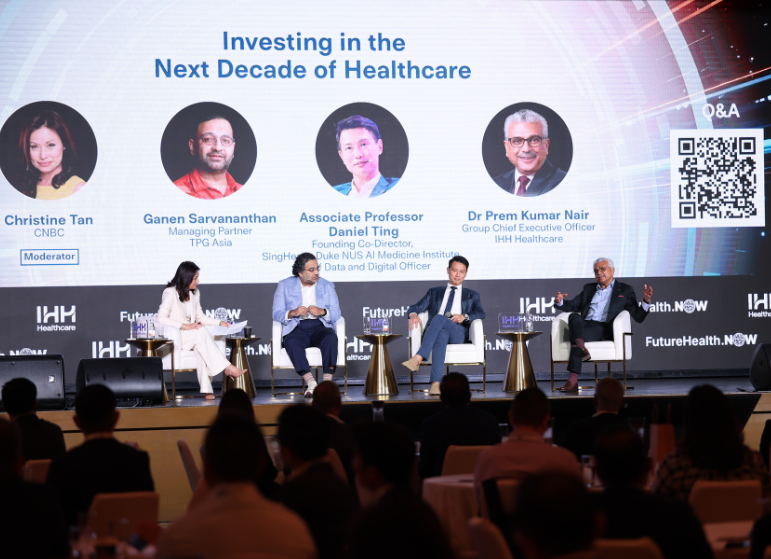
The conference’s opening panel examined how healthcare can become a driver of productivity, economic growth and national competitiveness, and the role of investment, innovation and technology in building more sustainable health systems for the future.
Moderated by CNBC’s news anchor Christine Tan, the panel featured Dr Prem Kumar Nair, Group Chief Executive Officer, IHH Healthcare; Ganen Sarvananthan, Managing Partner, TPG Asia; and Associate Professor Daniel Ting, Co-Director, SingHealth Duke NUS AI Medicine Institute, Chief Data and Digital Officer.
When asked about what will shape investment decision in the next decade, Dr Prem shared, “Three healthcare megatrends that will reshape how care is delivered are ageing populations, the advancement of technologies including AI, robotics and imaging but most importantly, healthcare affordability.”
During the conference, healthcare leaders explored how health systems can improve outcomes while remaining sustainable by accelerating value-based care, expanding community and virtual care models, and strengthening public-private partnerships. They also examined how AI is moving from experimentation to implementation, improving efficiency, supporting clinical decision-making and enabling more personalised care, with trust and governance seen as key to wider adoption.
The discussions also highlighted the growing importance of cancer care and precision medicine. Advances in genomics, biomarker-driven therapies and data-driven insights are enabling more personalised treatment approaches, while continued investment in partnerships, infrastructure and equitable access will be essential to scale these innovations effectively.
Focus on preventive health and longevity
Reflecting the conference’s focus on preventive and personalised healthcare, IHH Healthcare Singapore unveiled Healthspan, an initiative that supports individuals to live healthier and more fulfilling lives. Healthspan represents a shift from traditional episodic care to a proactive, continuous health management model centred on early detection, personalised interventions and long-term wellbeing.
Healthspan will be supported through a range of current and future offerings, including preventive screening, advanced diagnostics, genomic health, specialised services and targeted programmes.