

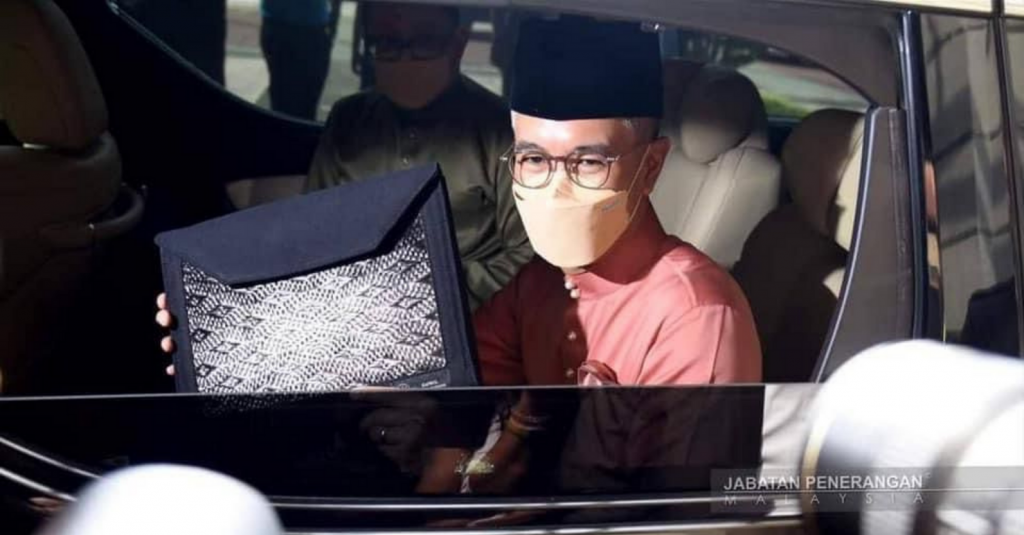
KENINGAU – It was the proudest moment for Keningau traditional weaver, Emily Jeneble, when the bamboo woven folder bag, which she skillfully crafted, made a fashion statement on Budget Day.
The full black weave bag was used by Finance Minister Tengku Datuk Seri Zafrul Tengku Abdul Aziz when unveiling the Budget 2022 in Parliament on Oct 29.
The fine bamboo art piece in the middle of each cotton canvas folder has been delicately hand-woven with kelarai (checkered patterns), a traditional motif of her Dusun community.
Emily said the bag was designed and produced in partnership with Sasibai Kimis, the founder of Earth Heir, a luxury craftsmanship brand, whom she met at the Kuala Lumpur International Craft Festival in Putrajaya in 2017.
“I took three days to hand-weave the bag,” she told Bernama.
The 40-year old masterful weaver from Kampung Batu Lunguyan Sook, here, brings with her over 20 years of experience making traditional handicraft from bamboo.
On her partnership with Sasibai, she said that their collaboration can be traced back to 2018.
“I would usually prepare the craft based on his design sketch,” she said, adding that she had also been collaborating with Kraftangan Malaysia especially in the design aspects.
Inherits Grandmother’s Weaving Skills
Emily, who is also the manager of Seri Elf Enterprise and Chairperson of Koperasi Kraf Batu Lunguyan Sook Berhad, said she inherited her weaving skills from her Dusun family lineage, notably her grandmother and her mother and aunt, who are traditional craft makers.
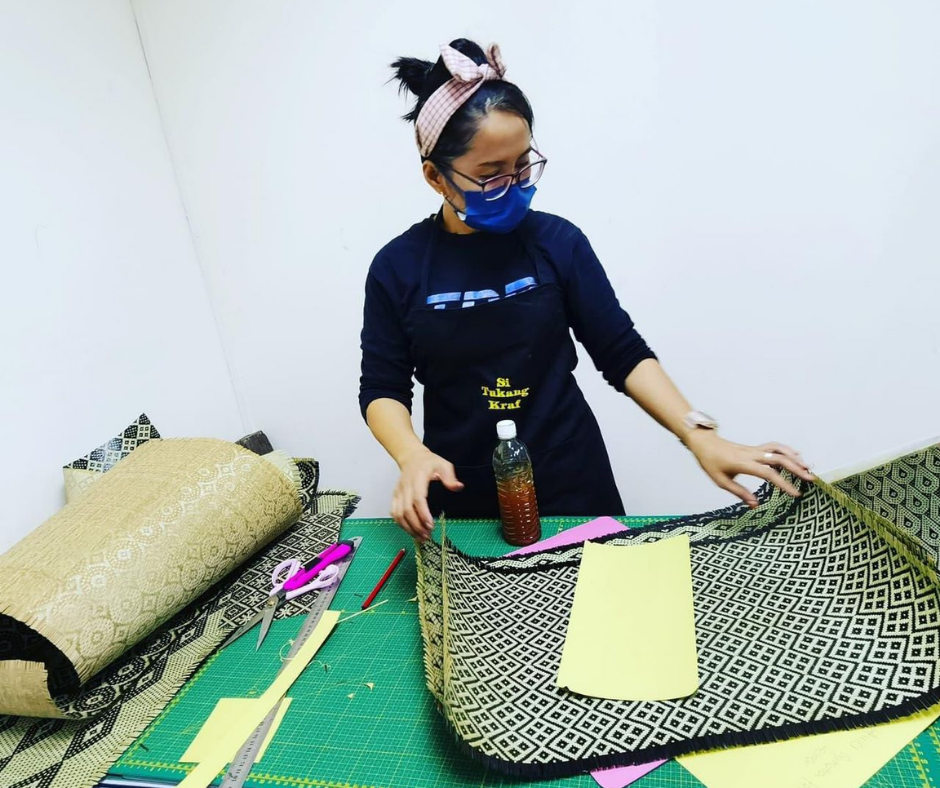
The Sabah artpreneur said she first dabbled in weave crafting at 17, when her mother was weaving bamboo trays for her customers.
“I was really excited then although I only knew how to make simple motif patterns, which were also among the items on request. From there, I developed an interest in weaving as they could also generate income,” said the mother of five, aged five to 20 years old.
On the traditional Dusun motifs, she said ‘nurungan’ symbolises a pearl, while ‘nandus andus’ is based on the shape of arrowheads of Dusun warriors while ‘tavaran’ which means ‘corn’ is based on the pattern of corn ears. To cope with demand for her handmade craft, Emily said, she is being assisted by her apprentice Marcella Hassan.
One Month to Produce Woven Bamboo
On her traditional craft journey, Emily who has a Diploma in Handicraft Business from Institut Usahawan Muda Malaysia 2019, said the materials used for the craft are fully sourced from her own village.
While most of her products are bamboo-based, there are also those that are made of rattan and pandan, she noted.
She said the process of producing a product is based on each creation and the materials used. For woven bamboo, the process takes up to a month as each product is derived from natural raw materials sourced from the forest.
For bamboo products which are hand-woven and sewed, the process takes only one week, she added.
“The durability of the products would depend on the frequency of use. However, decorative hand-woven craft such as flower vase, table cloth or wall covering are more sustainable and can last for many years,” said Emily.
She said her core products are based on ‘salingkawang’ woven bamboo featuring motifs from the Dusun Minokok and Murut Sabah ethnic groups.
Young Handicraft Entrepreneur Award 2018
Emily said besides ‘salingkawang’ bamboo woven baskets, other sought-after products include ‘tikalis’ (tote) bags, key chains, sling bags, gift boxes, folder bags for documents and knapsacks as well as wallets which are sold between RM2 to RM380.
For her contribution to the traditional handicraft industry, Emily received the Young Handicraft Entrepreneur Award in 2018 from Kraftangan Malaysia at a commemoration for National Handicraft Day and the Malaysia Good Design Award from the Malaysia Design Council in 2017 and 2019.
“Every product is intricately crafted with a fusion of traditional and modern motifs such as fashion, souvenirs and decorative items. Other creations include tikalis bags, which are inspired from tampi or winnowing trays for padi used by the Murut ethnic group,” she said.
Her overseas forays include participating in handicraft expositions and road shows in Italy, Germany, China (Shanghai), Indonesia (Jakarta) and the Philippines (Manila).
Emily said she owes her success to the relentless support of her husband, Junaidi Roslee, 47, who also helps run her business.
Online Sales
She said that the strong demand from airport retailers and handicraft shops nationwide also provided a consistent income stream for her village community, who are also weave crafters.
“In addition, we also receive orders from various ministries which use our craft as souvenir items for every programme hosted,” she said, adding that she had also been working together with 30 members of the community for her raw material supply.
However, due to the COVID-19 pandemic, Emily had to pivot her business by conducting sales online with marketing assistance from Kraftangan Malaysia, she said.
Looking ahead, Emily said she hopes to one day produce a book on the evolution of bamboo woven craft as well as to set up a gallery that showcases the evolution of the weaving legacy since the 70s to date.
“Both can serve as sources of reference for students, universities and craft lovers, in addition to generating income from visitors locally and abroad,” she added.
— BERNAMA
Join our Telegram channel to receive latest news alert