

As life expectancy continues to increase and birth rates decline, Malaysia is steadily moving towards becoming an aged nation. According to the Department of Statistics Malaysia (DOSM), individuals aged 65 and above accounted for 8.0% of the country’s population in 2025, up from 7.6% in 2024, with 12 states already classified as ageing.
As the number of older Malaysians grows, finding sustainable ways to provide quality care is becoming an important social and economic priority.
Growing Responsibilities of Malaysia’s Sandwich Generation
While longer life expectancy is a positive sign of social and healthcare progress, it also presents new challenges for families. Increasingly, adult children are finding themselves responsible for supporting ageing parents while simultaneously raising children and maintaining careers. Many adults now belong to what is commonly known as the “sandwich generation” where individuals provide care for ageing parents while also supporting children or young adults.
Beyond financial assistance, caregivers often coordinate medical appointments, manage medications, arrange transportation, monitor health conditions and respond to unexpected emergencies. These responsibilities can be difficult to balance alongside full-time employment and household commitments. According to research in 2020 titled, Malaysian Sandwich Generation: Issues and Challenges in Elderly Parents Care, balancing eldercare responsibilities alongside work and family commitments can contribute to emotional stress, fatigue and caregiver burden.
Strong Sense of Filial Responsibility
In Malaysia, caring for ageing parents at home continues to be the preferred choice for many families. Cultural values, close family relationships and a strong sense of filial responsibility mean that many older adults remain in their own homes instead of looking to assisted living facilities.
For many seniors, remaining in familiar surroundings provides a greater sense of comfort, independence and emotional wellbeing when supported by appropriate healthcare services, and reliable support systems.
One of the greatest concerns faced by caregivers is uncertainty. Many adults spend large portions of the day wondering whether their parents are safe. A simple missed phone call can trigger anxiety, particularly when elderly parents live independently or have existing health conditions.
Health and safety concerns remain among the most serious challenges associated with ageing, particularly for older adults living independently at home. According to the National Health and Morbidity Survey (NHMS) 2025, 18.8% of Malaysians aged 60 and above now live alone, nearly triple the 6.3% recorded in 2018. A fall that goes unnoticed for several hours can lead to severe complications and prolonged hospitalisation. Families may also worry about wandering behaviour associated with dementia, sudden medical emergencies, missed medication schedules or significant changes in daily routines that may indicate declining health.
Even households that employ domestic helpers are not immune to these concerns. While helpers provide valuable assistance with daily tasks, they may not always possess the medical knowledge or training required to recognise early warning signs of health deterioration or respond appropriately during emergencies.
As a result, many caregivers find themselves constantly checking in through phone calls, messages or video calls, creating stress for both themselves and their ageing parents.
How AI is Transforming Home-Based Elder Care
Recent advances in artificial intelligence (AI) are beginning to reshape how families approach home-based caregiving. AI-powered care technologies are now designed to identify meaningful events and provide actionable insights in real time.
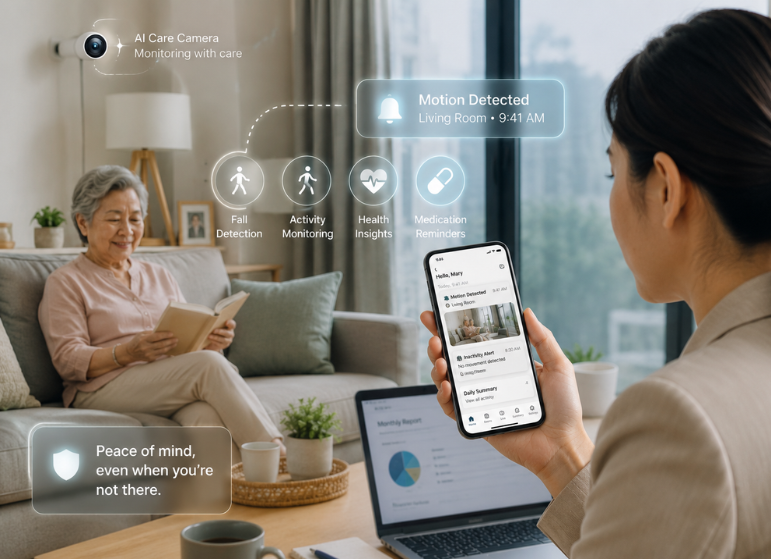
These systems can detect situations such as falls, prolonged inactivity, wandering behaviour or signs of distress, enabling caregivers to respond more quickly when intervention may be required. Instead of monitoring live video feeds throughout the day, caregivers receive notifications only when unusual activity is detected.
This approach helps reduce the emotional burden of constant monitoring while improving visibility into an elderly person’s wellbeing. Importantly, AI does not replace human care. Rather, it functions as an additional layer of support that enables caregivers to make better-informed decisions and respond more effectively when assistance is needed.
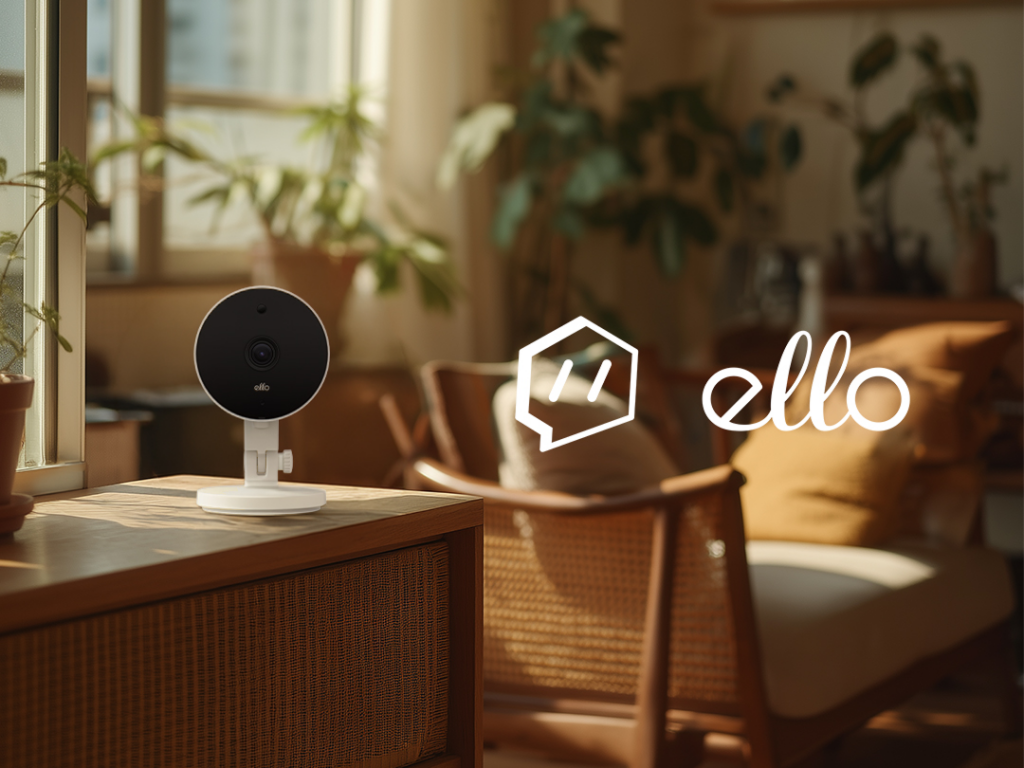
One example of this emerging category of care technology is Hello Ello, a Singapore-based AI caregiving technology company that recently launched its Vision One care camera, ELLO.
According to the company, its solution was developed specifically for adult children who are balancing work, family and caregiving responsibilities while seeking greater peace of mind regarding the wellbeing of ageing parents.
Unlike regular security cameras that record footage and require users to review what happened after the fact, ELLO is designed to watch for caregivers. It learns daily routines, identifies unusual activity, and alerts families only when something appears wrong. Through the app, caregivers can receive critical event notifications, check live streams, review key moments, and ask plain-language questions such as “Where’s Dad?” or “Has Mum been up today?” without having to scroll through hours of video footage.
The platform also includes a Daily Summary feature that provides an overview of daily activities, allowing family members to stay informed without relying on frequent phone calls or manual check-ins. Through the application, caregivers can review important events, access live video feeds and use conversational AI features to ask simple questions.
According to Ivan Mun, Founder of Hello Ello, the objective is to build a care technology that works quietly in the background, respects the dignity of ageing parents, and gives families the reassurance that someone is always paying attention to what matters. “Most families do not need another camera that creates more work for them. They need something that understands when something is wrong and tells them clearly, so they can act.”
Malaysia’s ageing population is expected to continue growing in the years ahead, bringing new challenges for families, healthcare providers and policymakers. While no technology can replace the compassion, attention and emotional support provided by family members, innovative tools are increasingly helping caregivers manage responsibilities more effectively.
By combining human care with intelligent monitoring and timely insights, families may be better equipped to support ageing loved ones while preserving the dignity, autonomy and quality of life that older adults value most.