

Malaysia’s cultural richness and serene beauty coupled with historical sites and famous places is a complete package for every kind of traveller
Malaysia is a great tourist destination for both local and overseas travellers. Whether you are looking for a short vacation within a certain state or planning an upcoming holiday across the country, Malaysia offers many unique historical sites for you to visit and explore.
Malaysia’s cultural richness and serene beauty coupled with historical sites and famous places is a complete package for every kind of traveller. Here are 8 famous historical buildings that are a must-visit to experience the antiquity of Malaysians.
Makam Mahsuri, Langkawi
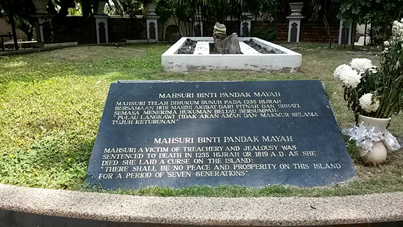
Mahsuri’s Tomb (also known as Makam Mahsuri) is located in the village of Mawat, 12km from Kuah, Langkawi. According to folklore, Mahsuri was a princess born over 200 years ago, who married the love of her life during a time of conflict with the Siamese. Her husband went off to fight in the war and the village chief at that time, jealous of Mahsuri’s beauty, vengefully accused Mahsuri of adultery. Mahsuri protested her innocence but the village elders tried the young girl, found her guilty and sentenced her to death by stabbing. She was tied to a stake and when she was stabbed, she bled white blood, a sign of her innocence. With her dying breath, Mahsuri cursed the island with seven generations of bad luck.
Today, the Makam Mahsuri’s area has been developed as a historical and cultural complex where there are cafes and food stalls.
Lembah Bujang, Kedah
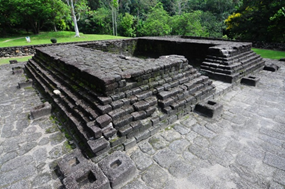
The Bujang Valley or Lembah Bujang, is a rich historical site situated near Merbok, Kedah, between Gunung Jerai in the north and Muda River in the south. It is the richest archaeological site in Malaysia.
The Lembah Bujang Archaeological Museum displays evidence that clearly shows Lembah Bujang served as a central port for Chinese, Indian, Arab and Malay traders dominating the routes between the eastern and western countries. Lembah Bujang was also the first port in Southeast Asia which functioned as an alternative route to China or Far East to replace the Silk Road, which connected Chinese and Far Eastern traders by land. The Archaeological Museum displays artefacts including pottery shards, ceramics and stoneware which dates back 1,500 years.
To get to the Bujang Valley from the North-South expressway, you can exit at Sungai Petani (South exit) or from the north at Gurun (or travel to Bedong). At Sungai Petani (south exit) a straight road that bypasses the town centre takes you there. Look out for signboards indicating ‘Lembah Bujang’.
Fort Cornwallis, Penang
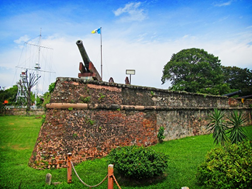
Fort Cornwallis is the largest standing fort in Malaysia. Built in 1786 and named after Marquis Charles Cornwallis, Fort Cornwallis was intended as a defensive structure against pirates, Kedah forces and even the French during the Napoleonic Wars. Although it was initially built for the Royal artillery troops and the military, it served an administrative function rather than an actively defensive one.
The fort stands on the site where Captain Francis Light first set foot in 1786 and took possession of the island from the Sultan of Kedah. He then established a free port to lure trade from Britain’s Dutch rivals. Situated on Penang’s north-eastern coast, a stroll along the privately-managed Fort Cornwallis’ perimeters will take you about 10 minutes.
Kuala Pak Amat, Kelantan
Kelantan is situated in the most northern state of the East Coast of Malaysia. Here, you will find the historical Kuala Pak Amat (Pak Amat Beach), one of the first landing sites of the Japanese soldiers in Malaysia in December 1941. Some of the notable things to see at Kuala Pak Amat is a simple monument commemorating the Japanese landing at the beach.
Batu Bersurat, Terengganu
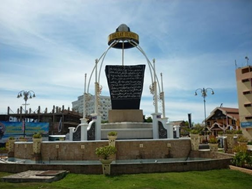
The Batu Bersurat, Terengganu or Inscribed Stone of Terengganu constitutes the earliest evidence of Jawi writing (writing based on Arabic alphabets) in the Malaya Muslim world of Southeast Asia. The Stone is a testimony to the spread of Islam as well as depicting the growing Islamic culture subsumed under a set of religious laws. The stone was found by a gold and tin mining Arab trader in 1903.
Today, the replica of the stone is placed in two locations – a memorial in Kampung Buluh, Kuala Berang and a mammoth replica at Ladang Roundabout in Kuala Terengganu. The original stone is displayed at the State Museum of Terengganu.
Dataran Merdeka, Kuala Lumpur
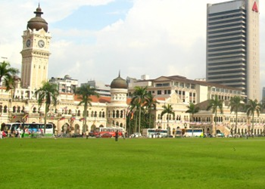
Dataran Merdeka or Merdeka Square is one of Kuala Lumpur’s best known landmarks. The square is set in front of the Sultan Abdul Samad Building (the former State Secretariat). Directly in front of the square is the Royal Selangor Club and to the north is St. Mary’s Church, one of Malaysia’s oldest Anglican churches.
Despite numerous changes to its landscape over the years, Kuala Lumpur has retained the beauty of Dataran Merdeka and its colonial surroundings. The beautifully-tended, 200m-long field is the historical place where the Union Flag was lowered, and the Malayan flag was raised for the very first time at the struck of midnight of 31st August 1957.
Istana Seri Menanti, Negeri Sembilan
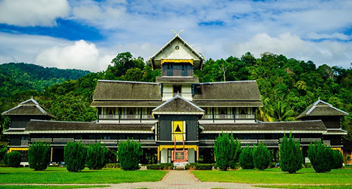
The Seri Menanti Royal Museum (Istana Seri Menanti) is located in the small town of Seri Menanti in the Kuala Pilah district of Negri Sembilan. Seri Menanti is the royal capital of Negri Sembilan. The rulers of this state are of Minangkabau origin having migrated from western Sumatra about six centuries ago bringing their distinctive customs and architectural style with them.
Istana Seri Menanti was constructed between 1902 and 1908 as a royal palace to replace an earlier one which was destroyed by the British in 1875. It was built by two highly skilled local craftsmen, aided by technical drawings provided by the British.
This site is unique because its four-storey wooden structure was made without the use of nails but with chengal wood – a durable and termite-resistant tropical hardwood, and with ironwood roof tiles.
A’Famosa, Malacca
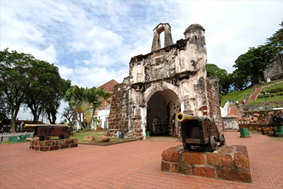
A’ Famosa is Malacca’s best known sightseeing spot. Originally constructed by Alfonso de Albuquerque (who led the Portuguese invasion on the Malacca Sultanate), the fort was an architectural masterpiece during the 16th century. A’Famosa is a wonderful spot for photography lovers, who can capture some stunning images of this crumbling structure.
Malacca, with its rich history and culture, has always been a popular tourist destination in Malaysia. The remains of this historical site is where you can get a glimpse into Malaysia’s colonial past which has passed through the hands of three different colonists: the Portuguese, Dutch, and British. You can try taking a trishaw to enjoy other sights in Malacca such as St Paul’s Hill and Stadhuys.
Now that our inter-state borders have been lifted, why not take this wonderful opportunity to explore Malaysia’s rich historical sites?
Join our Telegram channel to receive latest news alert