

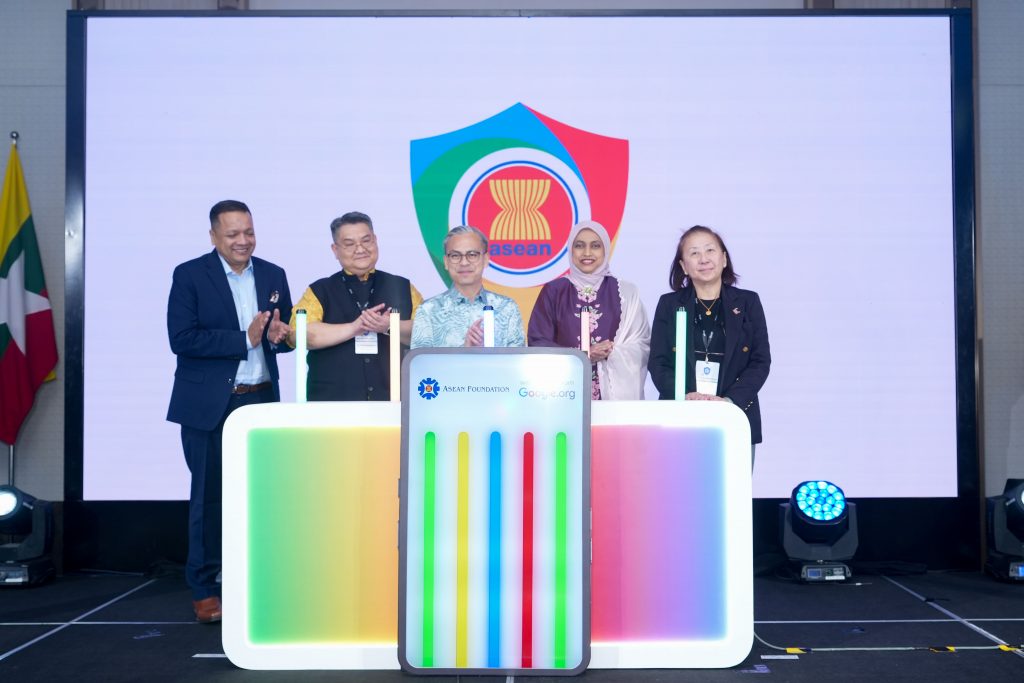
The ASEAN Foundation recently launched Scam Ready ASEAN in Kuala Lumpur, a regional initiative aimed at strengthening prevention against online scams across Southeast Asia. Scam Ready ASEAN was officially launched by YB Datuk Fahmi Fadzil, Minister of Communications of Malaysia, in the presence of the Board of Trustees of the ASEAN Foundation members as well as Ram Papatla, Managing Director, Trust & Safety, Google APAC.
Aligning with existing frameworks such as ASEAN Anti-Scam Working Group, a high-level policy dialogue was held in conjunction with the official launch. Representatives from key ASEAN digital, financial, and consumer protection bodies convened with banking and tech stakeholders to share best practices and lay the groundwork for future cross-sector collaboration.
Supported by Google.org with US$5 million funding, Scam Ready ASEAN aims to build scam resilience for 3,000,000 people across ASEAN, representing one of the region’s largest-ever digital defence initiatives against online scams. The programme seeks to equip ASEAN communities with the knowledge, digital confidence, and critical thinking skills needed to recognise and prevent scams in an increasingly complex online environment.
A Threat Affecting Communities Across the Region
Online scams have become one of the fastest-growing digital risks facing Southeast Asia, cutting across borders, sectors, and communities. While ASEAN’s digital transformation has created significant economic and social opportunities, it has also increased exposure to cyber-enabled fraud. In 2024 alone, Southeast Asia incurred an estimated USD 23.6 billion in financial losses due to online scams. According to Global Anti-Scam Alliance (GASA) State of Scams in Southeast Asia 2025 Report, 63% of adults in Southeast Asia experienced a scam in the past year, with phone calls and SMS remaining among the most common scam channels across ASEAN.
In Malaysia, online scams have become an increasingly urgent concern as more people rely on digital platforms for banking, communication, and everyday transactions. While digital adoption has made life more convenient, it has also created new opportunities for scammers to exploit trust in online interactions. The Royal Malaysia Police (RMP) reported over 34,000 scam cases in 2023, resulting in approximately RM1.2 billion in financial losses. High case volumes have continued in recent years, underscoring the scale of the issue in the country.
Beyond financial loss, scams are also affecting public confidence in digital services. As more Malaysians adopt cashless payments and online platforms, concerns around safety and trust are becoming more pronounced.
In response, Malaysia has stepped up efforts to strengthen scam prevention and response, including the establishment of the National Scam Response Centre (NSRC) to enable faster reporting and action. These efforts are supported by closer coordination between enforcement agencies, financial institutions, and telecommunications providers, alongside ongoing public awareness initiatives.
As generative AI, digital payments, and social media continue to evolve, scams are becoming more widespread and harder to spot. They are now affecting people from all walks of life—young people, families, older adults, and even those who are just starting to go online.
To keep communities safe from these evolving threats, Scam Ready ASEAN will partner with 20 local organisations across 11 Member States to deploy a large-scale Train-the-Trainer model. By mobilising 2,000 Master Trainers, the initiative will deliver structured modules and interactive tools such as the Be Scam Ready game (click to play), to at least 550,000 beneficiaries. This grassroots education will be amplified by localised awareness campaigns and a series of six national and three regional policy dialogues, including in Malaysia, to drive a unified, cross-sector defense against online fraud.
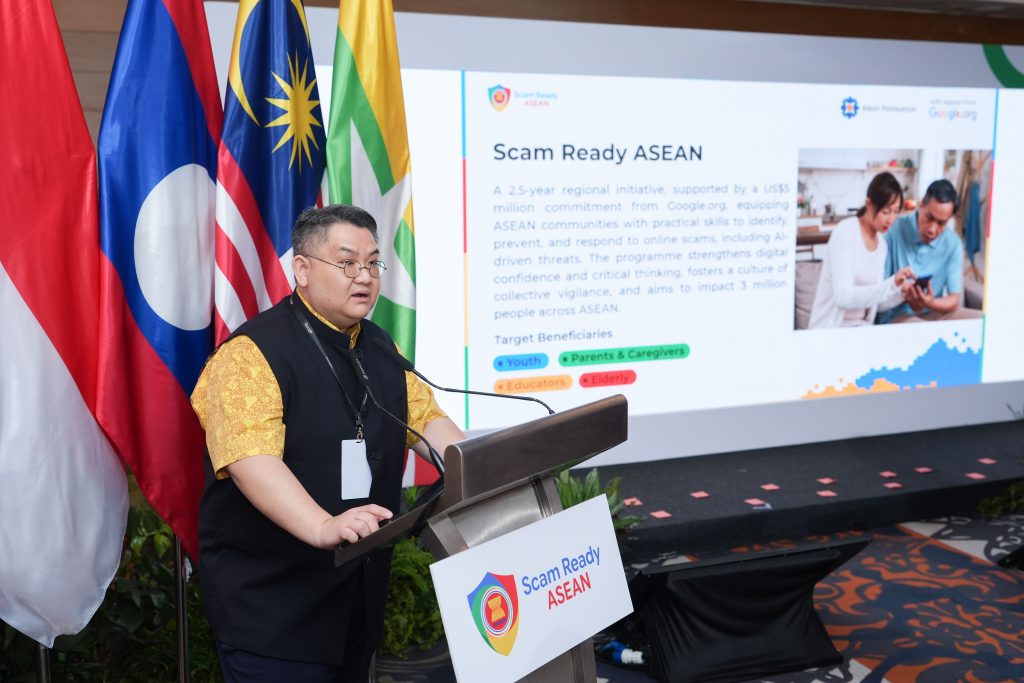
“Scams today are no longer isolated incidents—they are a growing, shared challenge that affects people across borders, sectors, and communities,” said Dr. Piti Srisangnam, Executive Director of the ASEAN Foundation. “Across Southeast Asia, we are seeing how scams impact not just individuals, but trust in our digital spaces more broadly. Scam Ready ASEAN is about shifting our approach—from reacting to scams, to preventing them and being better prepared. By working closely with communities, policymakers, and industry, we hope to build a safer digital environment where people feel more confident and protected as ASEAN continues its digital journey.”
“The success of Southeast Asia’s digital economy must be anchored in a foundation of trust,” said Sapna Chadha, Vice President, Southeast Asia. “To stay ahead of bad actors who are evolving their tactics, we are enhancing the security of our products and platforms, while supporting initiatives like the Scam Ready ASEAN programme to ensure that every citizen is empowered with the knowledge to keep themselves safe online. More than just awareness, this is also about investing in a whole-of-ecosystem approach where governments, industry, and civil society work together to protect the region.”
A Regional Effort to Build Scam Resilience
At the regional level, ASEAN has also taken important steps to address online scams, including the establishment of the ASEAN Anti-Scam Working Group at the 4th ASEAN Digital Ministers’ Meeting in 2024, which focuses on strengthening cooperation among national anti-scam centres.
Building on this momentum, Scam Ready ASEAN translates ASEAN’s policy commitment into a multi-year programme that promotes a whole-of-society approach to scam prevention, bringing together governments, industry, civil society, and communities to strengthen regional resilience against online fraud.
The growing scale of online scams across Southeast Asia has prompted wider regional cooperation on anti-scam measures. ASEAN Guide on Anti-Scam Policies and Best Practices was jointly developed by ASEAN member countries and issued in early 2026 to provide practical recommendations for governments, regulators, telecommunications providers, and industry stakeholders in strengthening scam prevention and cross-border cooperation across the region. The guide focuses on improving anti-scam coordination, public protection, information sharing, and telecommunications safeguards across ASEAN.