

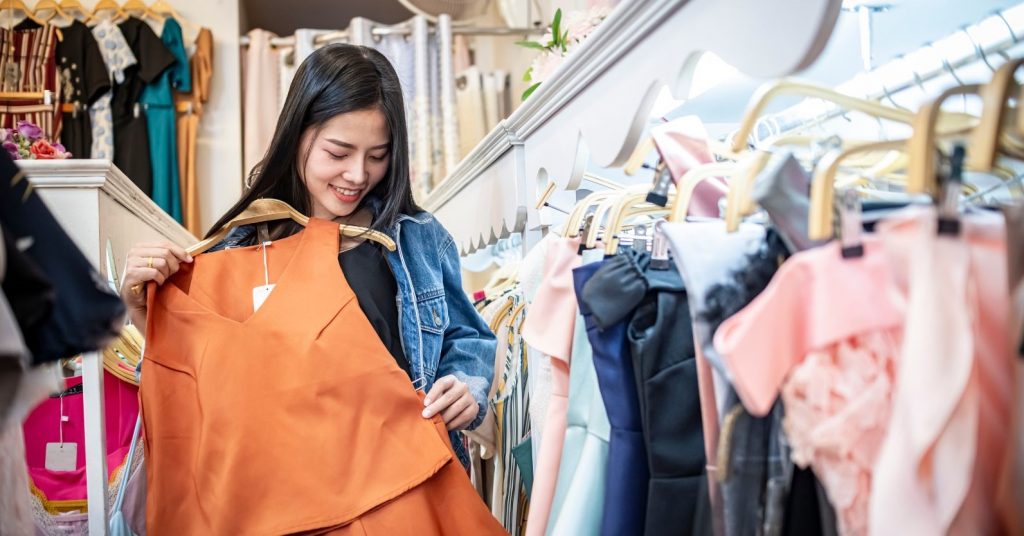
In the past, shopping for clothes used to be a once-a-season affair, or when there were special occasions or annual sales. The proliferation of social media where everyone can now make a fashion statement has fuelled the craze for fashion trends especially among the younger generation.
Fast fashion consumerism has resulted in over 92 million tons of waste being created each year and approximately 7.6 million garbage trucks are needed to clear the tons of garbage alone, according to Carousell Recommerce Index 2021. Mass retailers sell these trendy clothing at a lower price. But sadly, customers only wear them a few times before discarding them. As a result, garbage accumulates in landfills on a daily basis as more items are discarded rather than worn.
Fast fashion refers to cheap and stylish clothing that copies concepts from the catwalk or celebrity culture and instantly transforms them into clothing in high street stores. To outperform the competition, customer demands must be met. Such relentless pressure is having a wide-ranging impact where the consumers increasingly demand and expect more at a lower price. Since speed is essential in mass production, people are often overworked to meet high demand.
In comparison, slow fashion is known as a small industry with good profits and fair wages. It uses people from the local or nearby areas who are willing to work instead of force and serve as a means of making a living.
Historically, fashion were slow back in the 1800s where people had to find own materials such as wool or leather, prepare them, weave them and then sew the outfits together. But ever since the Industrial Revolution introduced new technology, such as the sewing machine, clothes manufacturing grew simpler, faster, and less expensive. Dressmaking shops sprang up to serve the middle classes and hence, many of these dressmaking shops employed garment teams or home workers.
“Slow fashion” is a term coined by Kate Fletcher. The name was inspired by the slow food movement, which was created in response to the fast food industry in 2007. Just like the fast food industry, Fletcher felt the need for a slower fashion movement that discourages wasteful consumption. Slow fashion refers to clothing made with sustainable products that are meant to consider environmental and social impacts.
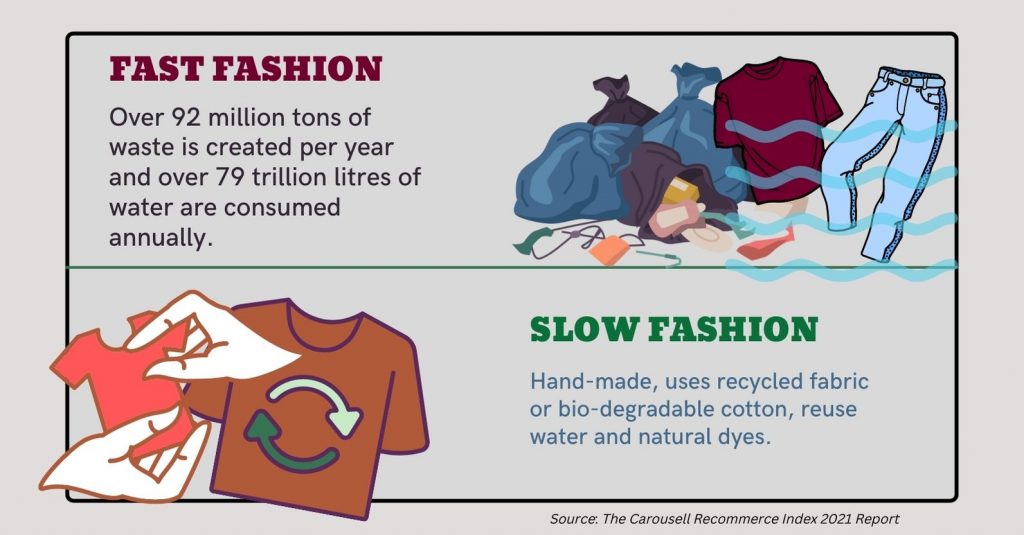
Fast fashion’s negative repercussions include the use of inexpensive and harmful textile dyes, thus making the fashion industry as one of the world’s largest pollutants of clean water. According to Carousell Recommerce Index 2021, over 79 trillion litres of water are consumed annually to sustain the production of cotton and other textiles, and over 92 million tons of waste is created per year.
Slow fashion uses natural fibres such as recycled fabric or cotton that are bio-degradable, organic that allows us to recycle, reuse and repurpose. There are no hazardous chemicals used in dyes or waterproofing, and closed water systems are frequently used in manufacturing to reuse water and prevent colour from entering the wastewater.
Here are some tips to support slow fashion:
- Do not treat your apparel as throwaway
Apparel can always be repurposed in an environmentally friend manner. Instead of disposing them, we can recycle, reuse, trade, sew, purchase, sell and even donate the garments to charity shops or thrift stores. In this way, it is more sustainable and lengthens the apparel lifespan.
- Switch to second-hand shopping or thrifting
Choosing second-hand products and shopping at thrift stores is the slow fashion option. Thrift or charity shops sell second-hand items from clothes to accessories that are made possible from donations. These items qualify them as pre-loved products. According to Carousell Recommerce Index 2021, 78% of respondents in Malaysia have made second-hand purchases. This demonstrates that Malaysians are starting to appreciate second-hand garments. Through thrifting, we actively keep plastic out of landfills and help reduce demand for fast fashion.
- Check before purchasing
Always check goods, materials, resources, and manufacturing practises before purchasing. Finding our slow fashion brand may take some time. Alternatively, you can shop at a charity shop or thrift store that offers a wide range preloved clothing.
- Stick To Natural Fabrics
Learn about eco-textiles and natural fibres before purchasing new clothing. We should buy linen, organic cotton, wool, peace silk, leather, and hemp clothing.These natural fabrics are eco-friendly which defines what slow fashion is.
Time to Support Slow Fashion
Fast fashion puts a strain on the ecosystem, whereas slow fashion attempt to restore the natural world. With chemical-free, sustainably grown natural products, the environment is less polluted and landfills receive less man-made waste. It is time to slow down fast fashion to speed up our effort towards achieving sustainability.
Join our Telegram channel to receive the latest news alert