

Popular traditional games that will always remain the enduring pride and culture of our Malaysian society
Gone were the days where children would amuse themselves with the simple hand-clapping and rhyming games with young girls chanting “set-set-set-bom-bom-bom” or “one-two-jus.” Very rarely does one find a child who knows the traditional games that we used to be so fond of, and even less knows how to play it.
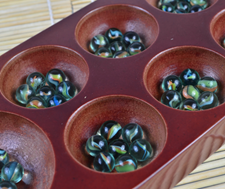
Congkak (Mancala Board Game)
The etymology of the name “Congkak” (pronounced as chong-kak) is believed to have originated from the word ‘congkak’ which means ‘count’ in old Malay language. Though, in Indonesia, the variant of this game more commonly recognized as “Conglak” which gives the meaning of cowrie shells that are often used as pieces.
But whichever name it goes by, the basics and rules of the game remains the same as the Congkak was originally deviated from the ancient Egyptian game called Mancala. History recorded that Congkak first appeared sometime during the Malacca Kingdom era where it became popular and spread to the neighbouring countries in South East Asia region. In those early days, it was a favourite pastime for the royalty and their palace servants, which was soon adopted by the local people.
Before the design of the current Congkak that we are familiar with was introduced, common womenfolk of the ancient times would dig holes in the earth and use tamarind seeds as the game pieces. Later on, the Congkak was refined into the form of a wooden board game. The concept of the boat design was said to be based on the legend of a fisherman that was unable to go to the sea during the monsoon seasons. Upset by the loss of income and to prevent boredom, he created the board game to resemble his beloved boat.
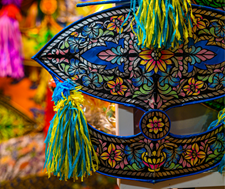
Wau (Kite Flying)
Wau is a traditional game that most people ought to be familiar with. In fact, it is so popular and widely known among our people that it has become the trademark of the Malaysian airlines. The Wau is a type of specially designed giant kite that is flown by local farmers on levelled ground after the rice-harvesting season. Several villagers would gather and challenge each other in a test of skill.
These gigantic kites, which is triple the size of the normal square kites, used to crowd the azure skies in the East Coast of Malaysia. Unlike the typical plastic kites sold in sundry shops, these Waus are famous for their intricate designs and comes in all shapes and sizes.
The origin of the kites stemmed from the myth where the kites were released into the skies and used as a war tactic to frighten their enemies away. And on a romantic path, there was also an old folklore where the Malay prince used the kite as a transport to lift himself to the heavens to meet his lover.
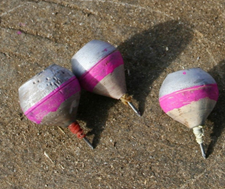
Gasing (Spinning Top)
Main Gasing is literally translated as spinning the tops. While there are variations of the game and rules with the tops appearing in different sizes and designs, suitable for people of every age; the original giant Gasing can weigh up to approximately 5 kilograms and if expertly hurdles, it can spin for as long as two hours.
Back in the olden days, the Gasing was a popular traditional game played among the adult villagers in Kelantan and Malacca. Due to the size of the original colossal Gasing, it’s normally a recreation for the men after the post-harvesting seasons, though, it draws the attention of the all the village folks, whether young or old, women or children.
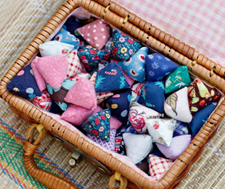
Batu Seremban (Five Stones)
Most young girls would be familiar with the game called Batu Seremban or otherwise known as Five Stones. The game play is similar to “jacks” but unlike its Western counterpart, it is not played with a ball. Instead, in Malaysia, the game pieces are usually made out of stones, pebbles, shells or tiny cloth grain bags, materials that little children can easily assemble from their home.
The objective of the game is to perform a series of steps with the palm, tossing and catching the stone, and though seemingly simple, it is a game that test the speed and agility of the players. A traditional garden game that was popular among the womenfolk to pass their time, as it can be played many rounds repeatedly, and the challenge lies on the increase of speed and deeper concentration.
Join our Telegram channel to receive latest news alert