

Agnes AI, a Singapore-headquartered AI model company announced that its proprietary models have entered the global top 10 AI labs across three independent AI benchmark rankings, marking a significant milestone for Singapore’s ambition to become a builder of frontier AI systems, talent, and infrastructure.
The latest rankings on Claw-Eval and Artificial Analysis follow Agnes AI’s earlier top 10 AI labs placement on PinchBench, a globally recognised agentic model evaluation benchmark. Together, the results establish Agnes AI not as a one-off contender, but as a consistently competitive AI laboratory built in Singapore and now appearing alongside global leaders such as Anthropic, OpenAI, Google, DeepSeek and other major AI labs.
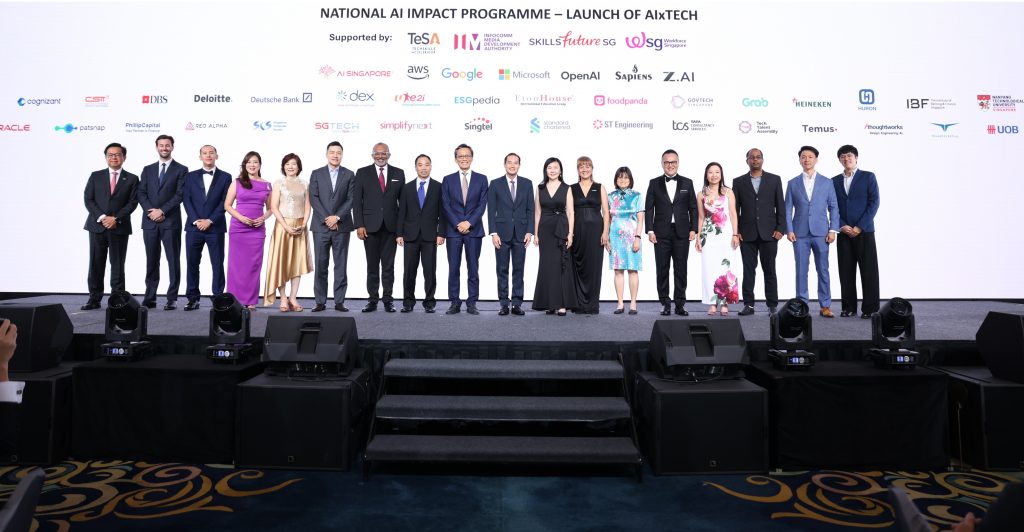
The announcement also follows Agnes AI’s participation in the Singapore National AI Impact Programme, launched with support from IMDA and AI Singapore to upskill 40,000 tech professionals.
“Singapore’s National AI Strategy 2.0 set out a clear ambition: that Singapore should be a builder of AI, not merely an adopter of it,” said Ang. “These benchmark results are evidence that this ambition is being realised. Agnes AI was built here, trained here, and is now recognised among the world’s top 10 AI labs, competing on equal terms with some of the largest AI companies globally. Our goal has always been to build AI that is globally competitive, openly accessible, and independent of any single power or ecosystem.”
At the core of Agnes AI’s strategy is a model-first approach to agentic intelligence, supported by proprietary system-level innovations including RLAF, DSPO, and UV, which are designed to enhance models’ ability to self-correct, reason over longer horizons, and perform complex, multi-step tasks.
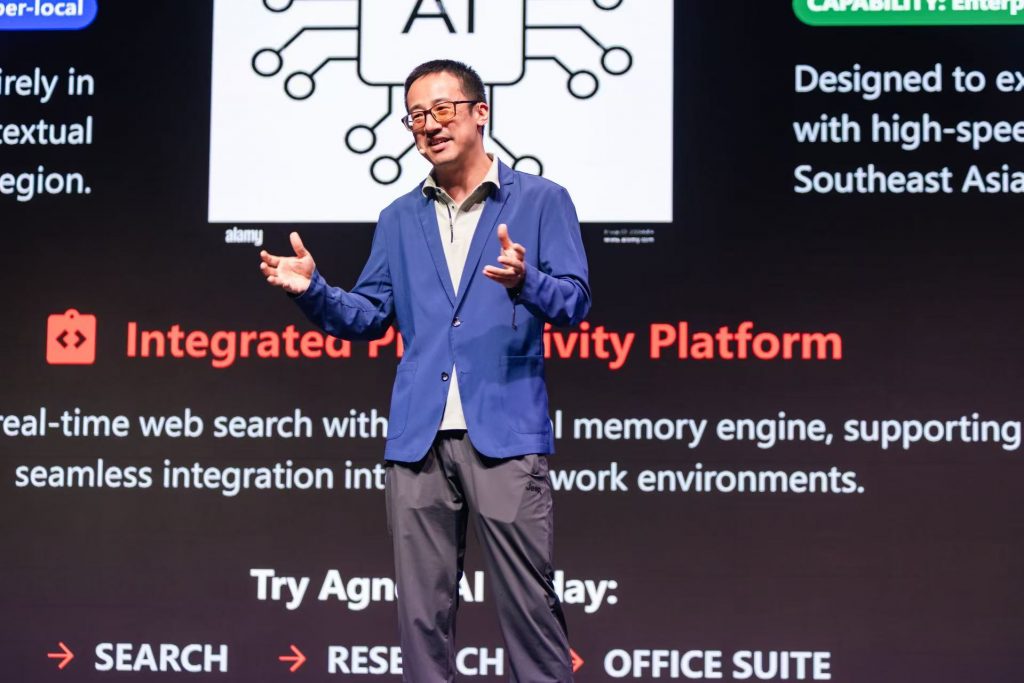
“For developers, enterprises, and emerging markets running high-frequency AI workloads, cost matters. Our focus is to make globally competitive AI accessible, scalable, and practical for real-world deployment,” said Bruce Yang, CEO of Agnes AI.
Agnes AI’s model suite spans agentic text models, image generation and editing models, and video generation capabilities, supporting use cases across enterprise automation, content generation, search, and developer workflows.