

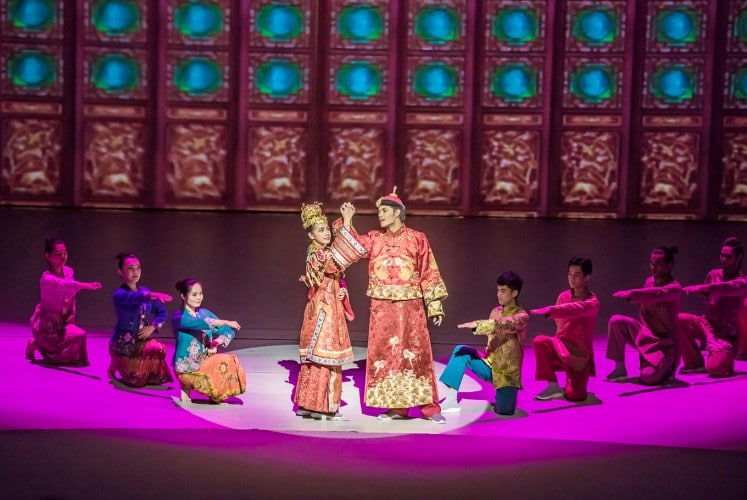
The term ‘Peranakan’ means “local born” in Malay. It generally refers to people of mixed Chinese, Indonesian or Malay heritage. Most Peranakans originated from the Straits Settlement of Malacca, Singapore and Penang. During the 15th century, merchants and entrepreneurs from China were lured to Malacca’s shores due to stories of the city’s burgeoning success and wealth. These traders went on to marry local Malay women – descendants of these marriages were known as Peranakan or ‘Straits-born Chinese’. Over time, they assimilated Malay language and customs into their lives, and created a fusion culture of their own.
Babas & Nyonyas
The Peranakan Chinese commonly refer to themselves as Baba-Nyonya. Baba refers to a straits-born Chinese men, while the women are known as Nyonya. Malay influence is very strong in their clothing and food, but they have also retained their Chinese heritage, especially their religion, name and ethnic identity. The language of the Peranakans, Baba Malay is a creole language related to the Malay language (Bahasa Melay) which contains many Hokkien language.
Eclectic Architecture
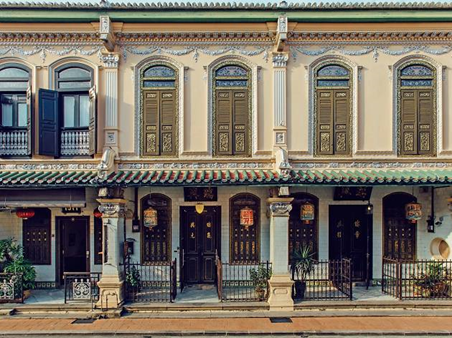
The Babas’ relative success in trading resulted in these expatriate merchants becoming the principal wealth catalysts of Malacca. They flaunted their affluence by purchasing Dutch townhouses and transforming them into luxury homes. The interiors were opulent with Dutch-influenced fixtures including hand-painted tiles and Victorian lamps.
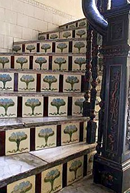
Their architectural style also incorporated other cultures, fusing together Victorian, Chinese and Malay elements. Elaborate and striking Chinese carvings adorned the pillars.
The Babas and Nyonyas spared no expense in acquiring Chinese blackwood furniture, Dutch tiles and porcelain vases to decorate their homes. A typical Peranakan house features a main hall, second hall, one or two courtyards, bedrooms, bridal chamber and a kitchen. In those days, visitors to the house were allowed to the first hall. The second hall was used by unmarried Nyonyas – who cannot be seen by members of the opposite gender – to peep through small openings dividing the first and second halls. Now, as the social life changes, the younger generation of Nyonyas no longer need to ‘hide’ in here.
Nyonya Cuisine
Peranakan culture, as a whole, is largely defined by its cuisine. A fusion of Malay and Chinese traditions, Nyonya cuisine is about the blending of spices, employing pungent roots like galangal, turmeric and ginger; aromatic leaves like ‘pandan’, fragrant lime leaf and ‘laksa’ leaf, together with other ingredients like candlenuts, shallots, shrimp paste and chillies. Sometimes, lemon, tamarind, ‘belimbing’ (carambola) or green mangoes are used to add a tangy taste to dishes.
Some of the more traditional Peranakan dishes include Ayam Pongteh which is a braised meat dish with potatoes cooked in gravy, fermented soya bean and palm sugar, Ayam Buah Keluak, and Otak-Otak, which is steamed fish flavoured with aromatic herbs and wrapped in banana leaf.
The locals use their fingers, not chopsticks, to eat.
Peranakan Culture
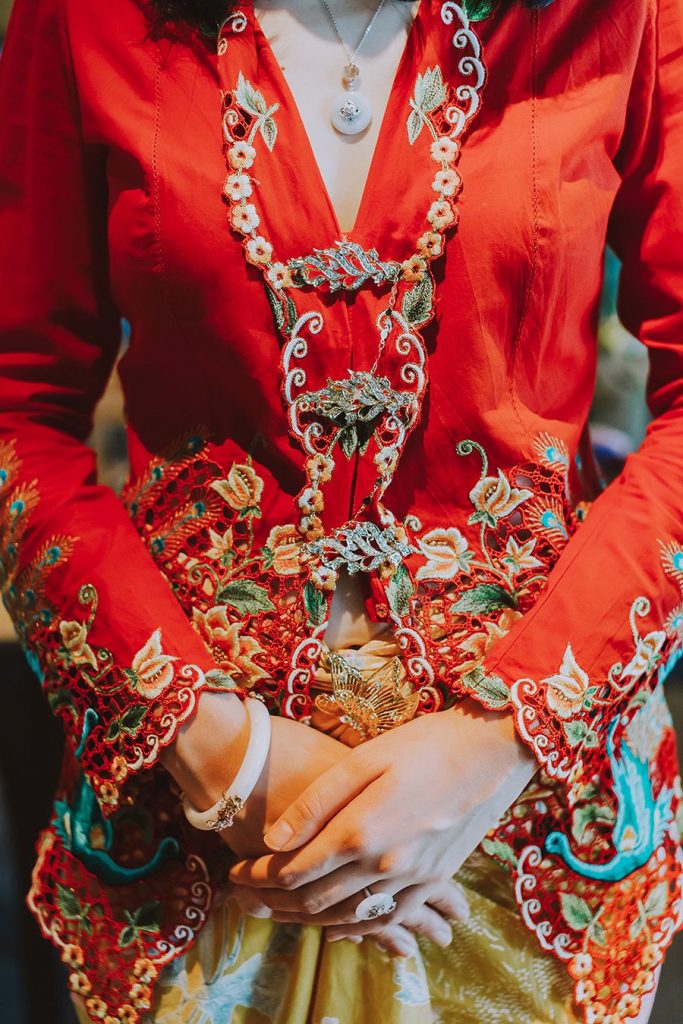
In their heyday, the Babas and Nyonyas were wealthy and influential people. This was evident in their jewellery, sarong kebaya attire, shoes and embroidery pieces. There are many items of refined workmanship in the Peranakan culture that are highly sought after by art and antique collectors. The Baba’s traditional costume is a Chinese dress, with intricate embroidery sewn using gold thread. The ladies wear ‘sarung kebaya’, a heavily embroidered Malay-styled tunic with a long skirt. They use silver ornaments like ‘kerongsong’ which are brooches to pin together their Malay-styled tunic. Hairpins, earrings and pendants are widely used to decorate themselves.
Despite the adoption of various cultures in their daily life, the Peranakans continue to cling to their Chinese identity in some aspects. They celebrate festivals like Chinese New Year and Mooncake Festival on a large scale. The older generation continues to observe Chinese religious beliefs and rituals, though many younger Straits Chinese eventually converted to Christianity.