

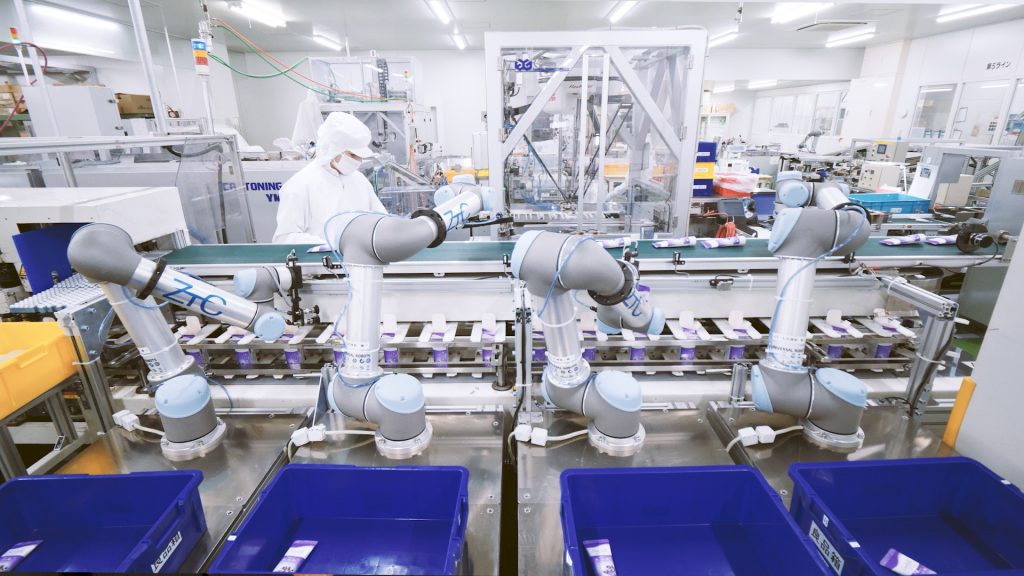
Universal Robots (UR), the world’s leading collaborative robot (cobot) company, advised local manufacturing industries to boost investment in robotics and advanced automation to help Malaysia achieve its targeted Gross Domestic Product (GDP) for manufacturing sector of RM587.5 billion by 2030, in line with New Industrial Master Plan (NIMP 2030).
The NIMP 2030 provides national strategic direction to lead the industrial development policies with three concise goals and four key missions to drive high-impact growth in Malaysia.
Although Malaysia’s manufacturing and services sectors have made progress, NIMP 2030 has identified several key challenges. Malaysia’s degree of economic complexity as measured by the Economic Complexity Index (ECI) has been stagnant up to 2020; while labour productivity growth is lower than Singapore, Thailand and the Philippines since 2000.
NIMP 2030 aims to catalyse Malaysia’s manufacturing industry growth by increasing economic complexity in production, advancing digital adoption, championing zero emissions, and safeguarding economic security and inclusivity.
Among the industrial tasks identified for robotics and advanced automation in NIMP 2030 include welding, assembling, inspecting defects and packaging—all crucial areas which cobots are best designed for. Capable of performing a myriad of applications, cobots are designed to share the workspace with humans, making automation easier for businesses of all sizes. The global collaborative robots market size, valued at US$1.23 billion in 2022, is expected to expand at a compound annual growth rate (CAGR) of 32.0% from 2023 to 2030.
Compared to industrial robots, cobots offer a lightweight and space-saving solution capable of flexibility on the manufacturing floor. The different capabilities of cobots allows automation for different forms of manufacturing—from automotive and medical devices, to pharmaceutical and machinery. Cobots also support the NIMP 2030’s push for net zero. When put against industrial robots, the smaller size of cobots is an obvious difference, translating to less energy consumed during operation.
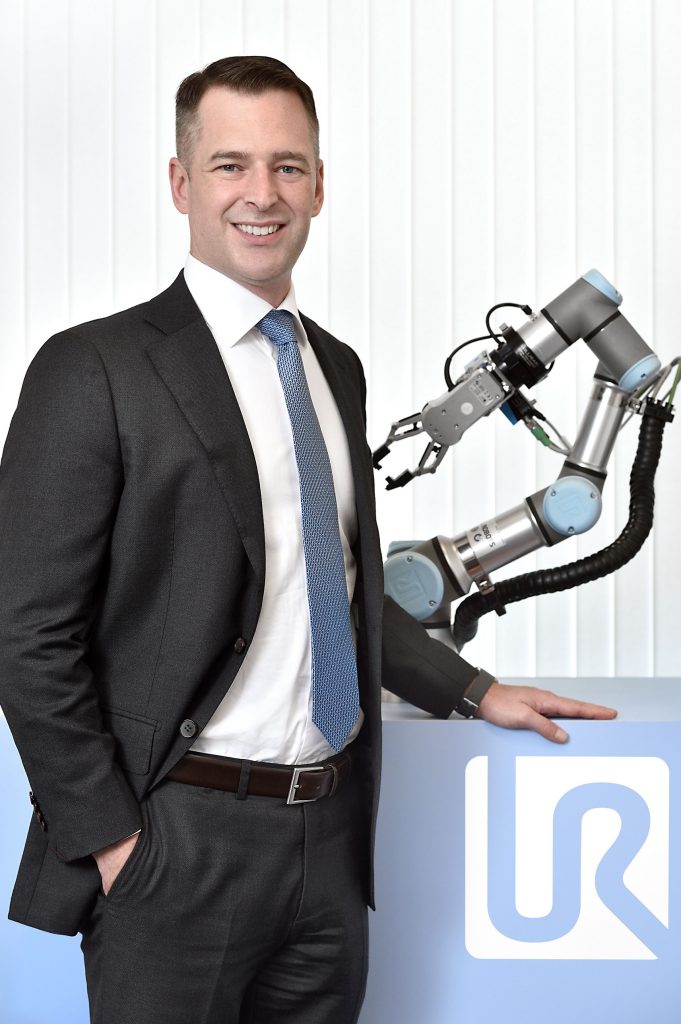
“Cobots offer manufacturers in Malaysia, from SMEs to MNCs, a flexible solution capable of performing a range of applications at energy efficient levels,” said Adam Sobieski, Regional President APAC at Universal Robots. “Accelerating the adoption of automation will be key in driving innovation, enhancing productivity, and creating new opportunities for growth. It will play a pivotal role in charting the next seven years of Malaysia’s industrial transformation.”
One common misconception is that automation takes over the job of human workers, but the goal of cobots is to work alongside humans collaboratively. Cobots take over the tedious, dangerous, and straining aspects of manufacturing, while allowing human workers to be deployed for more human-centric aspects of the job. Adopting a cobot helps upskill the worker through exposure to technology, providing opportunity previously lacking with manual labour. It aids in building supply chain resilience and giving security to the labour force, which contributes to the NIMP 2030 mission of safeguarding economic security and inclusivity.