


Global biopharmaceutical company AstraZeneca has made available a treatment for rare neurological autoimmune diseases and blood disorders, Soliris in Malaysia.
Soliris marks a significant treatment advancement for chronic autoimmune neuromuscular disease generalised myasthenia gravis (gMG) and neuromyelitis optica spectrum disorder (NMOSD) and severe blood disorders such as atypical haemolytic uraemic syndrome (aHUS) and paroxysmal nocturnal haemoglobinuria (PNH).
Soliris, a C5 complement inhibitor, binds and blocks C5 protein within the terminal complement pathway to help control the excessive immune response and alleviate symptoms manifested in complement-mediated diseases. Various clinical trials on Soliris have demonstrated the safety and efficacy of this treatment for aHUS, PNH, gMG and NMOSD.
At the launch of Soliris, Consultant Neurologist Dr Fu Liong Hiew of Sunway Medical Centre explained that gMG begins with muscle weakness around the eyeballs and eyelids and leads to weakness in the head, neck, limb and respiratory muscles while NMOSD affects the central nervous system such as the optic nerves and spinal cord that could eventually cause vision loss and paralysis.
Meanwhile, according to Consultant Haematologist Dr Chew Lee Ping from Hospital Umum Sarawak, aHUS is a rare disease due to immune dysregulation of the blood which can cause damage to the kidneys. PNH is a rare, chronic, progressive and potentially life-threatening blood disorder that causes red blood cells to break down prematurely, resulting in blood clots.
Rare diseases are often difficult to recognise and diagnose. Because these conditions are uncommon and their symptoms can look similar to more familiar illnesses, many patients spend years searching for answers. It is not unusual for individuals to see multiple doctors, undergo repeated tests, or receive incorrect diagnoses before their condition is properly identified.
“Research and development into rare diseases requires continuous innovation to deliver meaningful medicines for patients. With Soliris, we can advance our efforts in Malaysia to transform the lives of persons living with rare disease as well as their families to help them fully live their meaningful lives. Moving forward, AstraZeneca remains committed to advancing our legacy and leadership to advocate for the rare disease community,” said Svetlana Yanchuk, Country President for AstraZeneca Malaysia.
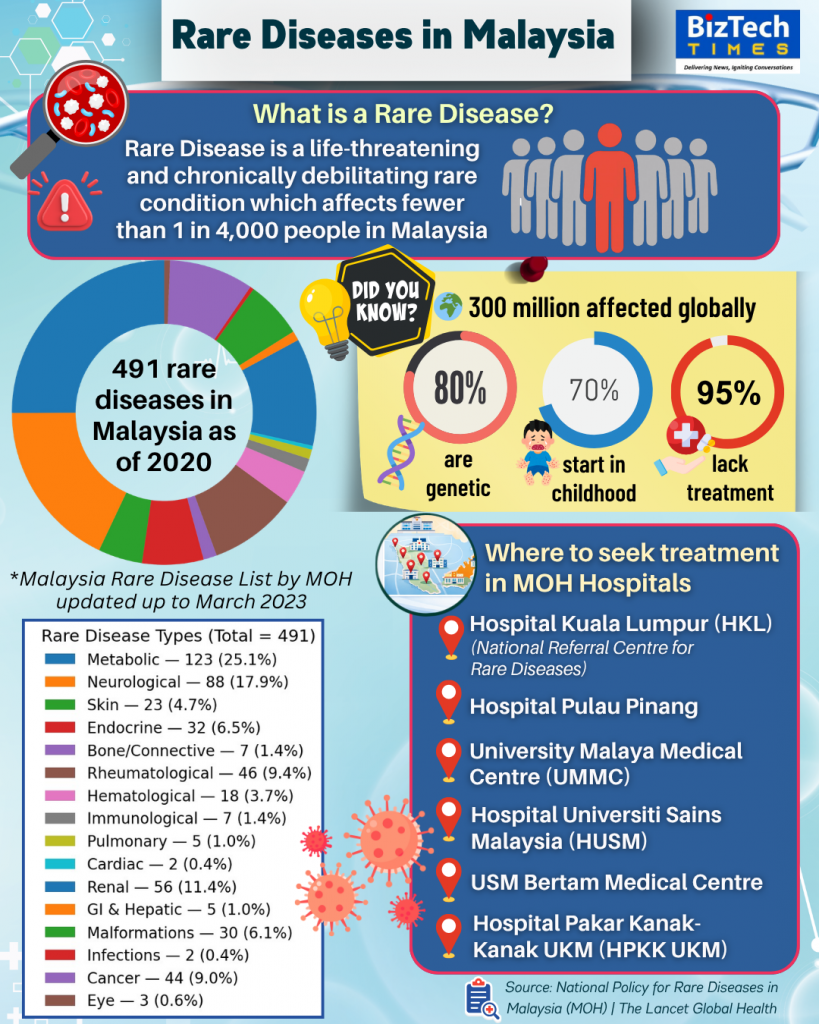
As of 2020, Malaysia recorded a total of 491 rare diseases and are often underdiagnosed. Majority of patients experience delayed and inaccurate diagnosis upon initial presentation, and their management is frequently complicated by a lack of access to treatment and information about the diseases.
To date, approximately 300 million people live with rare diseases. Such individuals are often a neglected and marginalised group, especially those in low-income and middle-income countries. Around 80% of rare diseases have a genetic cause, almost 70% of which present in childhood; about 95% lack approved treatments.