

I posed this question to Ng when I returned to the snack house. “Yes, the tunnel entrance you saw divides into three passages,” explained Steven, “at least according to the surveys that were done some years ago. One tunnel we know leads all the way to the temple, one we simply don’t know where it leads to, and the other, well, we think it must have led to Kellie’s garage, although we’re not sure where that was. Unfortunately, the passages are in such bad condition, we haven’t been able to explore them fully. But, according to the surveyors, there’s something very large down in that third tunnel – which, we think, must be a car.”
Ng must have noticed the surprise on my face: judging from the narrow tunnel entrance, there seemed barely enough room to squeeze a cat, let alone a car.
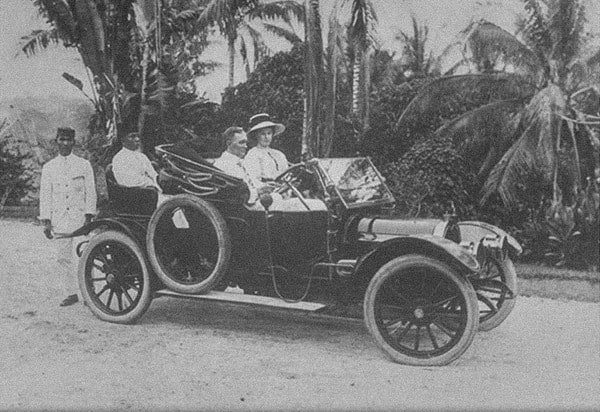
“Oh, yes, William Kellie was a great collector of cars. He probably had one of the best collections in Southeast Asia. One of them must have been left down there when he suddenly had to leave for Europe. It must have been driven in from the other entrance, wherever that is. The car is probably something like the one in that photo.”
He gestured to the walls of the kiosk where various photos showed Kellie in his heyday. In one he is in the front seat of a 1920s Model Ford with his wife. In another, he stands in a smart dress suit, an imposing 6’3” figure with the determined, thin smile of a man who probably felt it was his destiny to carve out a small empire in this corner of the world.
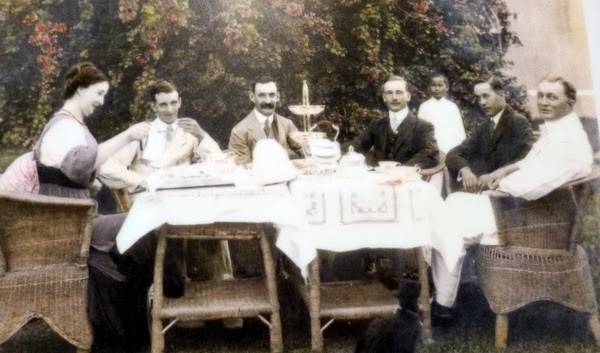
“He died of pneumonia soon after those photos were taken, in 1926” said Ng. “He was in Portugal at the time. You can still find his grave there, in the British cemetery in Lisbon while he was on his way to meet his family. Others say he was traveling to collect a lift, one that he had bought for his tower. Or was he in Portugal to buy concessions for East Timor? We just don’t know.”
Soon after Kellie’s death, his wife, Agnes, sold the estate and settled back in Scotland; Kellie’s son, Anthony Kellie Smith, was killed in World War Two, and his daughter never returned. The castle was left abandoned – some reports say it was used as an execution ground by the Japanese during the war, which might help to explain the ghost legends. Finally, the Department of Museums and Antiquities began restoring the castle a few years ago, and now it’s back to the condition Kellie left it when he made his final journey.
So what will happen to the castle? There have been suggestions to complete Kellie’s dream, redecorate the rooms and charge visitors to stay, something that Steven Ng has his reservations about: “For one thing,” he says “we don’t have the original architectural plans, so we don’t really know what he was planning, or what he wanted. Even if we knew, it would lose much of its character. People come for the mystery and the romance of the place, so maybe it’s better to keep it as it is.”
It was starting to get dark, and Stephen offered to drive me back to Batu Gajah. In the car on the way back, I asked if anyone had seen Kellie’s ghost. “Well, no one that I know has seen him.” Ng admitted, somewhat sadly. “I haven’t seen him, but I certainly would like to. I have many questions I would like to ask him – how was he going to finish the family wing, why did he build those tunnels and where do they go, why does the stairway bend back on itself like that …?
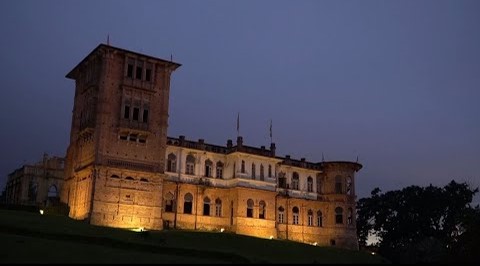
In the rear view mirror, the outline of the castle faded from view as it gradually disappeared into the jungle. The next time I visit, I thought to myself, I hope that at least some of the questions will be answered. —Heritage Asia Magazine