

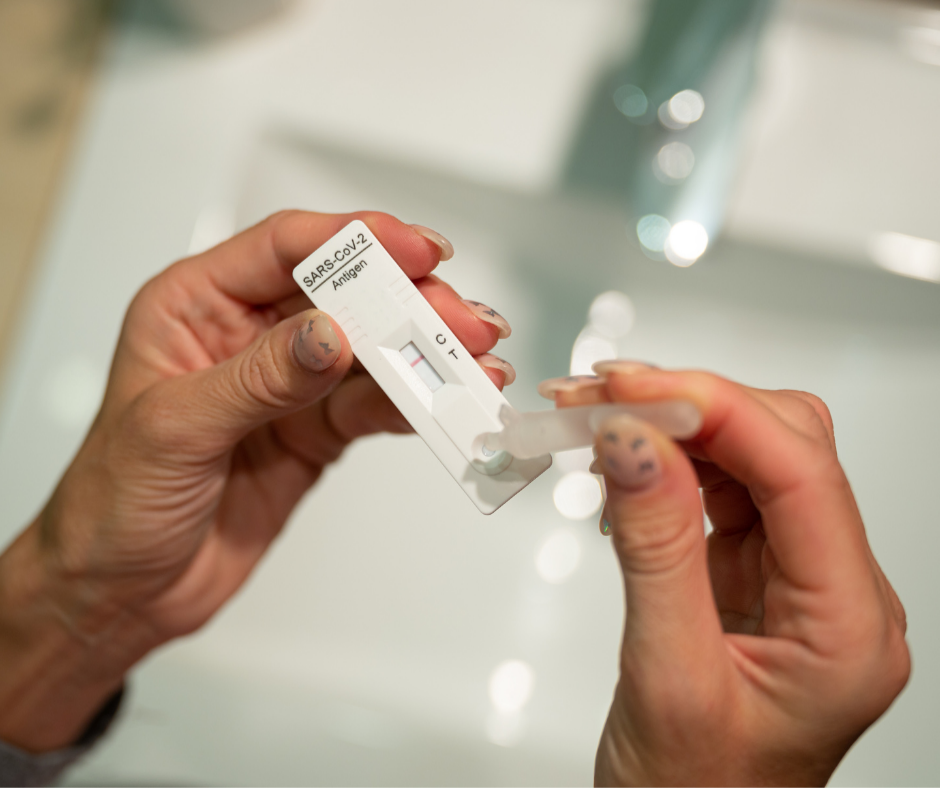
Many employers and individuals are testing for Covid-19 at their premises or homes instead of at a healthcare facility since self-tests have been approved by the Medical Devices Authority (MDA). As at October 4, 2021, the MDA has given conditional approval for over-the-counter use of 22 rapid antigen test kits to be sold at clinics and pharmacies. Of these, 15 are manufactured in China, four in South Korea, two in Malaysia and one in Singapore. Test samples are from the saliva in 13; nose in seven; and both saliva and nose in two. The United States Food and Drug Administration (FDA) has also approved 34 antigen tests as at October 4, 2021.
Whilst vaccination has been ramped up, testing for SARS-CoV-2 is central to Covid-19 management. The speed of the results is critical for infection control with frequent, rapid testing vital as a public health strategy to help control the pandemic. The highest risk of spread of Covid-19 appears to be two days before symptom onset through five days after. Those infected but are asymptomatic appear to clear the virus more rapidly.
PCR and Antigen Tests
The polymerase chain reaction (PCR) tests, which detect genetic materials of the SARS-CoV- 2 virus, are the gold standard for detecting the infection. The antigen tests (RTK-Ag) detect proteins on the viral surface. Its results are more likely to be in concordance with positive PCR tests when the viral load is high as determined by the PCR test cycle threshold (CT) value, which is the number of amplification cycles of viral RNA.
The CT values are inversely proportional to the amount of viral load and more severe Covid-19. The detection limit of RTK-Ag tests is currently at CTs of 30. When the CT is less than 30, which is indicative of a higher viral load, the concordance with positive rates with the RTK-Ag tests is higher. However, the PCR results are presented as positive or negative and not in CT values. As viral loads change during the course of the Covid-19 infection, the timing of the testing influences whether RTK-Ag tests detect an infection.
For example, if one was exposed today, it does not make sense to test tomorrow. On the other hand, testing too long after symptom onset or possible exposure would result in false negatives because of decreased viral loads.
Most RTK-Ag instruction sheets for healthcare professionals state that specimens collected from an infected person who had symptoms for more than five days may be more likely to have a negative RTK-Ag result than a negative PCR result, and that negative results should be treated as presumptive and confirmed with a PCR test, if necessary, for patient management.
Specimen collection is probably the biggest variable with RTK-Ag self-tests. Those collected by health professionals are more likely to detect the virus than when people collect their own specimen or their child’s. The reasons are that many people do not have a sense of how much to collect and how deep to insert the test probe.
Many self-test kits have instructional diagrams and/or videos to assist the public. As RTK-Ag tests do not depend on the viral spike protein for detection, the newer viral variants do not affect their performance.
Speed and Sensitivity
RTK-Ag tests are cheaper and provide results within minutes instead of a day or two (or longer) with PCR tests. Data from the FDA-approved RTK-Ag tests suggest they are not as sensitive in the real world compared to clinical trials. This may not be due to the tests themselves but is sometimes due to user error e.g. testing too soon or too long after a possible exposure to infection or incorrectly sampling the specimen. The jury is still out on the effective and efficient utilisation of RTK-Ag tests.
Negative Results
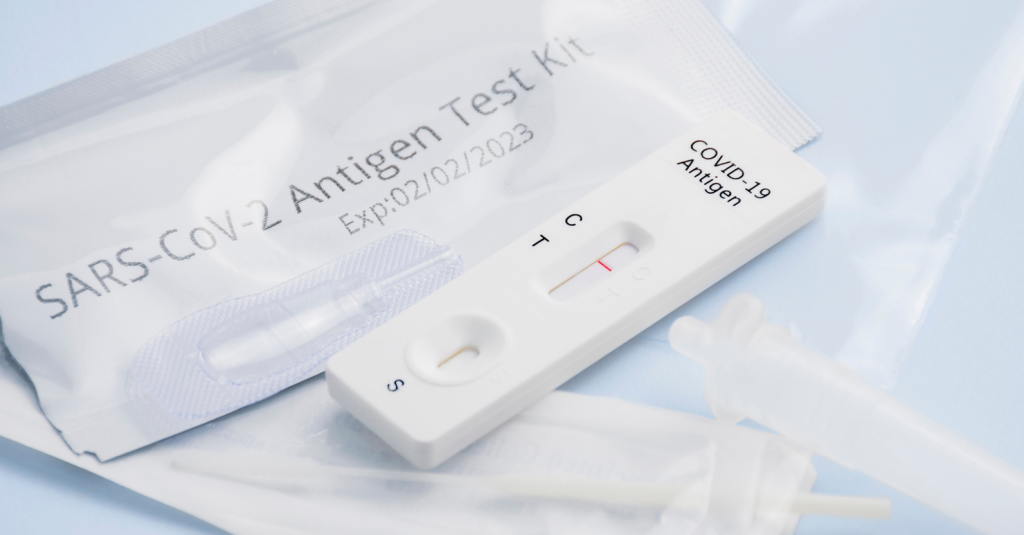
With the widespread community spread of Covid-19 in Malaysia, it is probable that a person is infected if their RTK-Ag test is positive. On the other hand, because of the lower sensitivity (i.e. the ability of a test to identify those with Covid-19) of the RTK-Ag tests, there is a higher false negative rate than PCR tests. Many fact sheets of the various tests state that one could possibly still have Covid-19 even when the test is negative.
As such, those who have Covid-19-like symptoms after testing negative should seek medical attention. The symptomatic who test negative should do a PCR test, although two negative tests probably mean that the symptoms are not due to SARS-CoV-2.
The sensitivity of RTK-Ag tests has been reported to be lower in the asymptomatic. Compared with the symptomatic, the asymptomatic would have been infected longer before testing, hence their viral loads may be too low to be detected with RTK-Ag. The false negatives are problematic because people will feel assured that they are alright when they are not.
Who is Monitoring?
The public has been asked to report positive self-tests to the Health Ministry. However, there is no data on its sales, the number of tests done and the results of the tests. A positive result is as important as a negative one. While health care facilities report all results to the Health Ministry, the same cannot be said of individuals and even employers.
Whilst an individual is advised to inform their healthcare provider for public health reporting, compliance is another issue altogether. What about those without a healthcare provider? Can the honour system be relied upon? It cannot be assumed that everyone participates in the healthcare system.
Utility of Self-Tests
The self-tests are not useful for one-off purposes e.g. testing prior to entry to mass events. Although RTK-Ag are not as sensitive as PCR, its speed and lower cost enables serial testing which increases the likelihood of detecting infection.
Testing once or twice a week in schools and at the workplace have been reported to have enabled identification and immediate quarantine of infected individuals, thereby preventing spread in workplaces and other social settings.
Whilst there is value to self-tests, its cost is a limiting factor to wider usage especially with large numbers of employees.
Are Results Accurate?
In a review of 64 studies by the Cochrane database, it was found that in confirmed Covid-19 cases, RTK-Ag correctly identified 72% with symptoms compared to 58% without symptoms. The tests were most accurate in the first week after symptoms first developed (78% of confirmed cases had positive RTK-Ag tests). In those without Covid-19, RTK-Ag tests correctly ruled out infection in 99.5% of those with symptoms and 98.9% of those without symptom.
Different brands of tests varied in accuracy. The criteria used in the MDA’s approval were the manufacturer’s reported clinical and analytical performance, the evaluation test results from testing facilities according to the committee’s evaluation criteria set by clinical expert panels and the manufacturer’s supporting documents. It is unclear what the MDA’s minimum performance requirements of the approved self-test kits are.
In the European Union, it is more than or equal to 90% sensitivity and more than or equal to 97% specificity (i.e. ability of a test to correctly identify those without Covid-19). The MDA has also not published comparative data on the various kits it has approved. In short, caveat emptor i.e. let the buyer beware, applies. A discussion with your regular doctor would be helpful.
Dr Milton Lum is a past president of the Federation of Private Medical Practitioners Associations and the Malaysian Medical Association.
Article was first published in ‘The Star’ on 12 October 2021
Join our Telegram channel to receive latest news alert